Alas! Why Could We Not Value Our Own Diamond?
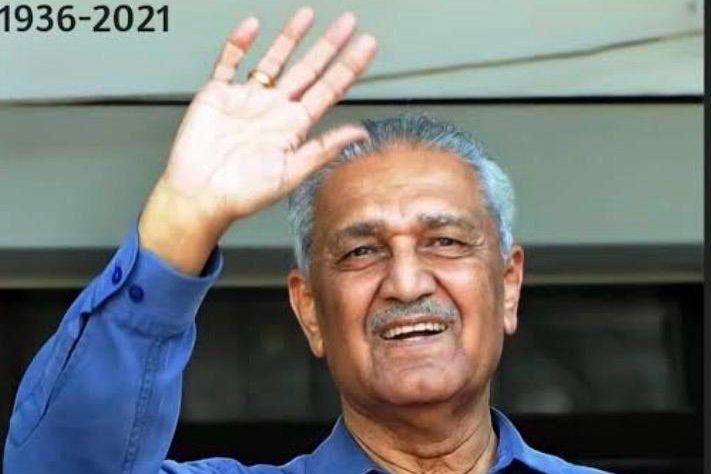
(By Shahid Ghazali)- Dr. Abdul Qadeer Khan remains one of the most recognized names in Pakistan’s nuclear history. His contribution to Pakistan’s uranium enrichment program made him a prominent figure in the country’s defense story.
However, the final years of his life also raise difficult questions about how Pakistan treated one of its most famous scientists. His journey was marked by achievement, controversy, restrictions and, ultimately, national mourning.
From Bhopal to Pakistan’s Nuclear Program
Dr. Abdul Qadeer Khan was born on April 1, 1936, in Bhopal, then a princely state of British India. After Partition, he migrated to Pakistan in 1952 and settled in Karachi.
He studied metallurgical engineering at the University of Karachi. Later, he pursued higher education in Germany, the Netherlands and Belgium. In 1972, he earned a doctorate from the Catholic University of Leuven in Belgium.
During his years in Europe, Dr. Khan gained experience in uranium enrichment and gas centrifuge technology. After India conducted its first nuclear test in 1974, Pakistan placed greater emphasis on strengthening its defense capability.
Dr. Khan offered his services to Pakistan’s nuclear program and returned to the country toward the end of 1975. In 1976, he took charge of the Engineering Research Laboratories at Kahuta, where work on uranium enrichment expanded.
It is important, however, to recognize that Pakistan’s nuclear program was not the work of one person alone. Scientists, engineers, technicians, the Pakistan Atomic Energy Commission and several institutions contributed to the program. Dr. Khan’s major contribution was particularly associated with uranium enrichment.
Pakistan Conducts Nuclear Tests
During the late 1970s and 1980s, Pakistan made major progress in its nuclear program. After years of scientific and technical work, the country reached a position where it could demonstrate its nuclear capability.
In May 1998, India conducted nuclear tests at Pokhran. Pakistan then faced intense domestic and international pressure.
On May 28, 1998, Pakistan conducted nuclear tests in the Chagai area of Balochistan. The achievement became a major national event, and May 28 was later commemorated as Youm-e-Takbeer.
The tests generated widespread public enthusiasm. Many Pakistanis viewed them as a major development for national defense and sovereignty. At the same time, Pakistan faced international sanctions and economic pressure.
Dr. Abdul Qadeer Khan subsequently became a national hero. He was widely known as Mohsin-e-Pakistan, and the government honored him with prestigious national awards.
The Controversy That Changed His Life
A few years later, Dr. Khan’s public standing changed dramatically. In 2003 and 2004, allegations emerged concerning the transfer of sensitive nuclear technology to Iran, Libya and North Korea.
International pressure increased, while investigations were conducted in Pakistan. On February 4, 2004, Dr. Khan addressed the nation on state television and accepted responsibility for the alleged transfers. He also apologized to the nation.
The following day, President General Pervez Musharraf granted him a pardon.
However, the controversy remained complicated. Questions emerged over whether the transfers represented solely an individual action or whether other actors were involved at state or institutional levels.
Dr. Khan’s later statements also reflected different positions on aspects of the controversy. Therefore, his role should be discussed by distinguishing between allegations, official positions and his subsequent statements.
Another important issue concerns the circumstances surrounding his 2004 statement. At the time, Dr. Khan was in government custody and faced restrictions on his movements. The government presented his statement as an admission, while some political figures and observers questioned whether he had acted under pressure.
Dr. Khan remained under house arrest for several years. In 2009, the Islamabad High Court ruled to end his detention. Even afterward, concerns about his movements and security remained part of the discussion surrounding his final years.
This created a striking contradiction in his public life.
On one side stood the scientist celebrated as Mohsin-e-Pakistan for his contribution to the country’s nuclear capability. On the other stood a man who spent years facing restrictions and controversy.
Questions also circulated about Dr. Khan’s pension. However, no authenticated government document was publicly available at the time of his death that conclusively established a specific monthly pension amount.
Dr. Abdul Qadeer Khan’s Death and Legacy
Dr. Abdul Qadeer Khan died in Islamabad on October 10, 2021, at the age of 85. His death was mourned across Pakistan.
His funeral prayer was offered at Faisal Mosque in Islamabad, and he was laid to rest with full state honors.
Opinions about Dr. Khan’s life and role may differ. Some aspects of his career remain subject to historical and political debate. Nevertheless, his prominent contribution to Pakistan’s nuclear program cannot be separated from the country’s nuclear history.
His life also offers a broader lesson.
A country should not recognize its national contributors only after they become part of history. Scientists, engineers, teachers, journalists and other citizens who serve their country are valuable national assets.
Dr. Abdul Qadeer Khan’s story therefore deserves objective study. His achievements should be recognized, while controversies should also be examined honestly.
Blind admiration does not help us understand history. At the same time, a controversy should not erase every contribution a person made to the country.
From Bhopal to Karachi, from European universities to Kahuta, and ultimately to Pakistan’s nuclear history, Dr. Khan’s journey remains extraordinary.
The question for Pakistan is not only how we remember Dr. Abdul Qadeer Khan today. It is also how we value our scientists and national contributors while they are still alive.
Perhaps that is the greatest lesson of his life.
We often recognize the value of our own diamonds only after they are no longer among us.
May Allah Almighty forgive Dr. Abdul Qadeer Khan and grant Pakistan the wisdom to recognize and honor those who have served the country. Ameen.